

You have a product you believe in, a store ready to take orders and a budget to bring more people through the door. Then comes the question: should you spend that budget on Meta Ads or TikTok Ads?
Search online and you’ll find confident answers in both directions. One person says Facebook and Instagram are essential for ecommerce. Another says TikTok is where brands should focus. Both may be describing what worked for their business, but neither knows your products, customers or margins.
The better starting point is your own business.
What do shoppers need to see before they buy? Can you regularly create useful product videos? Is your store ready for paid traffic? And how much can you afford to spend to acquire a customer?
This guide walks through those questions so you can make a more informed choice.
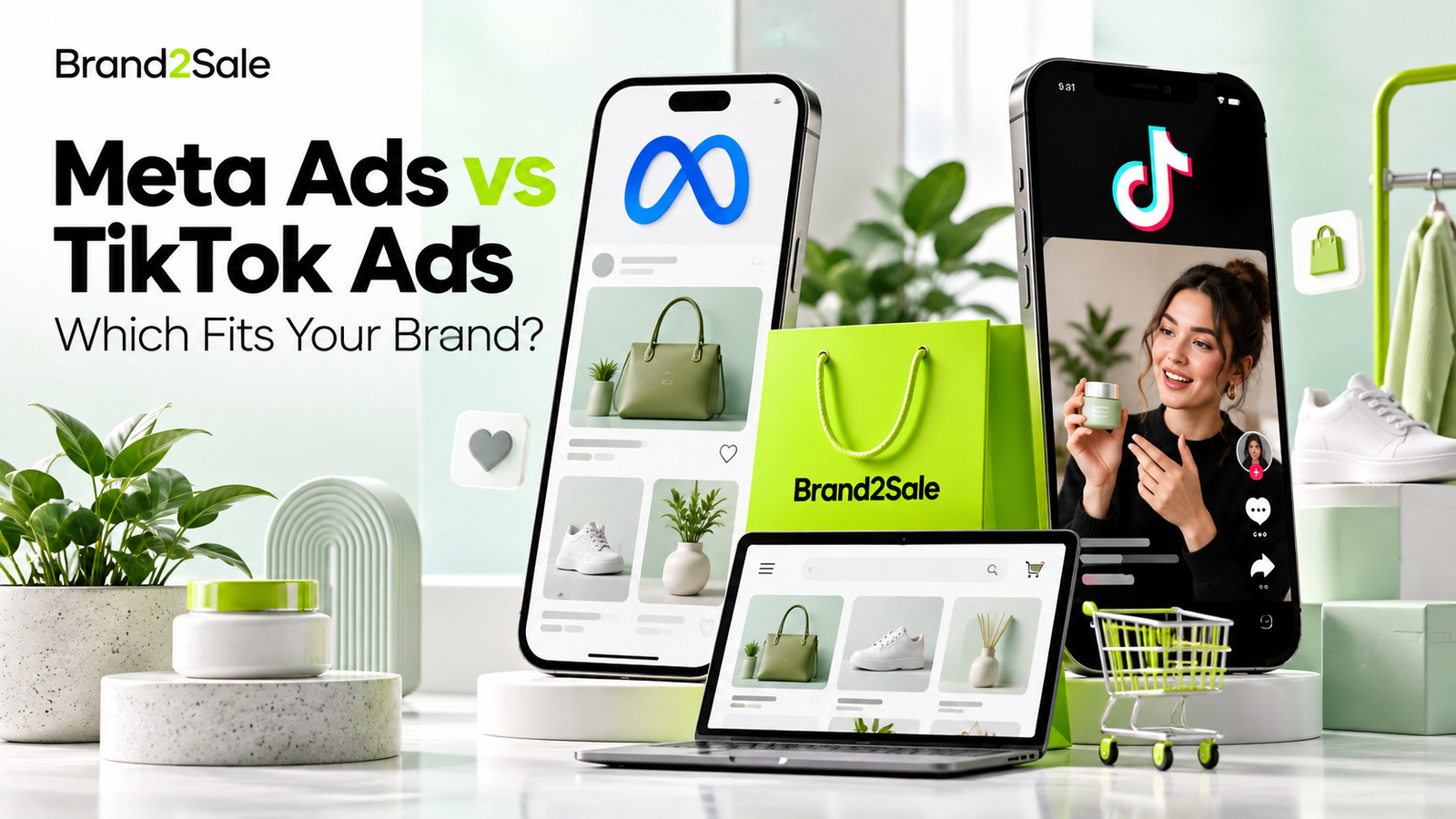
What Are Meta Ads?
Meta’s advertising ecosystem includes placements across Facebook and Instagram, including feeds, Stories and Reels. Depending on the placement and campaign setup, advertisers can use formats such as images, videos and carousels.
That flexibility gives you several ways to present a product. You might show a clear product photograph, explain a benefit in a short video or use a carousel to highlight different items in a collection.
Meta also supports short-form video advertising. Comparing the platforms as “Meta for images” and “TikTok for videos” misses an important part of the picture: Facebook and Instagram Reels can be part of your video strategy too.
For a store owner, the practical question is which of those formats you can produce well and what your customers need to understand.
What Are TikTok Ads?
TikTok gives brands a way to advertise within a content experience built around discovery and video.
Its own creative guidance recommends vertical video, sound, attention to interface safe zones and content made specifically for TikTok. It also encourages featuring people, such as creators, employees or customers, where appropriate. These are starting points for testing, rather than a formula that guarantees sales.
Think about a useful product demonstration: someone opens the package, shows how the item works and answers a question a shopper might have. That can make the product easier to understand than a polished photograph alone.
TikTok also offers Spark Ads, which allow advertisers to promote their own organic posts or authorized creator posts. Permission matters when using another creator’s content.
A Practical Comparison
| Question | Meta Ads | TikTok Ads |
|---|---|---|
| What creative can you test? | Images, videos and carousels across suitable placements | Platform-native content, particularly vertical video |
| What should you prepare? | Assets that suit the placements you use | Strong openings, clear demonstrations and a steady supply of video ideas |
| What is worth exploring? | Product presentation, explanations and different creative formats | Demonstrations, creator-led storytelling and product discovery |
| What determines success? | Audience response, offer, creative, store experience and economics | The same business fundamentals, with particular attention to content fit |
| Is a profitable result guaranteed? | No | No |
Use this table as a planning guide. It doesn’t predict which platform will perform better for your store.
Start With Your Product
Before choosing a platform, ask yourself: “What would make someone understand why this product is worth buying?”
Some products are straightforward. A shopper can see the style, colour and size, then decide whether it fits their needs.
Other products need a demonstration. A storage tool may make sense only when someone shows it solving a problem. A clothing item may benefit from showing its fit and movement. A pet-care product may require clear information about its intended use.
Write down the three questions people are most likely to ask before buying. Those questions can become your first creative ideas.
For example:
- What does the product actually do?
- How is it different from the alternatives?
- What will I receive, and when will it arrive?
If you can answer those questions convincingly through different images and videos, you have useful material to test on Meta. If you can turn them into engaging, natural demonstrations, you also have a reasonable starting point for TikTok.
Look at Your Customers Without Relying on Stereotypes
It is tempting to reduce the decision to age: TikTok for younger people, Facebook for older people.
That shortcut is too broad to make a budget decision.
Your customers have interests, purchasing habits, objections and priorities beyond their age. A person may discover a product on one platform, research it elsewhere and return to your store later.
Start with the evidence you already have. Review customer questions, product reviews, previous orders and existing marketing results. Look for patterns in why people buy and what makes them hesitate.
If you sell in a particular country, also check the advertising options and audience availability for that market before planning your campaigns. Features and availability can vary.
Your goal is to identify a sensible test, then let the results improve your understanding.
Your Ability to Create Content Matters
A platform can look attractive on paper and still be a poor fit for your current resources.
Suppose you have strong product photography, a few useful videos and limited time to film more. A focused Meta test using suitable formats may be manageable.
Now suppose you can film product demonstrations every week, work with creators and develop several ways to tell the same story. TikTok becomes a more practical option to investigate.
These are planning judgments, not universal rules. Meta campaigns also need fresh creative, and TikTok content still needs care, clarity and accurate claims.
The real question is whether you can maintain a useful testing process after the first campaign launches.
One video rarely gives you enough information to judge an entire platform. Prepare different concepts, rather than several copies of the same ad with minor changes.
Create for the Placement
A useful idea can travel between platforms, but its presentation may need to change.
Imagine a travel bag with several compartments. One creative concept might be “pack everything for a weekend away.”
You could explore that through a product carousel, a quick packing demonstration or a customer-style explanation. The central benefit stays the same, while the format changes.
For TikTok, consider opening with the action or problem immediately. For a Reels placement, keep important content clear of interface overlays and build a suitable vertical video. Meta’s own Reels guidance emphasizes vertical creative, audio and keeping key messages within safe zones.
Avoid spending the opening moments on an introduction that delays the useful part. Show the viewer why the product deserves their attention.
Which Platform Is Cheaper?
There is no reliable universal answer.
Ad costs depend on your market, audience, competition, campaign choices and creative. More importantly, inexpensive traffic does not necessarily produce inexpensive customers.
Consider this hypothetical example:
One campaign brings 100 visitors at a low cost, but only one buys. Another brings fewer visitors at a higher cost per click, but several buy.
The first campaign may look better if you check only clicks. The second may be better for the business.
Evaluate advertising against your actual economics. Include product costs, fulfilment, payment fees, shipping subsidies and likely returns when deciding what you can afford to pay for a sale.
ROAS is useful, but it describes attributed revenue relative to advertising spend. It does not tell you your profit by itself.
Check Your Store Before Buying More Traffic
An ad can earn attention. Your store still needs to help the shopper make a decision.
Open your product page on a phone and review it as if you were visiting for the first time.
Can you quickly understand the product? Are the price and purchase options clear? Can you find delivery information and the returns policy? Do the images support the claims? Does checkout work properly?
Also check whether the page matches the advertisement. If the ad presents one offer and the landing page appears to show another, visitors may hesitate.
For a Shopify store, useful preparation might include clearer product descriptions, better mobile layouts, organized variants and visible support information.
These improvements can support either advertising platform. Switching platforms will not automatically resolve a confusing shopping experience.
How to Run a Fair Test
Choose a specific question before launching. For example: “Can this platform acquire customers at a cost our margins can support?”
Then prepare the test around that question.
Confirm measurement. Check that the relevant purchase events are recorded correctly. Use tracking and customer data in line with applicable consent requirements.
Set a spending limit. Decide what you are prepared to spend to learn, rather than increasing the budget without a review point.
Prepare several distinct creative ideas. Test meaningful differences in the product story, demonstration or offer.
Keep comparisons understandable. Where practical, compare similar products, markets and offers. Record important differences so you don’t mistake them for a platform effect.
Review purchases and business outcomes. Look beyond views and clicks. Include customer acquisition costs, order values and margins.
Check attribution settings. Before comparing reported results, understand how each account credits conversions. Avoid adding the two platforms’ attributed revenue together and assuming every order is unique.
A fair test doesn’t require identical creative. It requires giving each platform suitable creative while keeping the business question clear.
Should You Use Both?
Using both can make sense when your business has enough budget, content and operational capacity to support meaningful tests.
It may be less useful when a small budget is spread across too many campaigns. You can end up with several weak signals and little clarity about what to do next.
Start where your current assets and customer evidence give you the strongest reason to test. Once you understand that channel better, consider a controlled test on the other.
Keep an eye on the business as a whole. New orders, returning customers and the cost of serving those orders matter alongside each advertising dashboard.
Common Mistakes to Avoid
Choosing based on another brand’s screenshot. Their results may involve different margins, audiences, offers and attribution settings.
Judging success by views alone. Attention can be useful, but it needs a connection to your campaign objective.
Changing everything at once. If you change the offer, page, audience and creative together, it becomes harder to understand what caused the outcome.
Scaling before checking fulfilment. More orders can create problems if stock, shipping and customer support are unprepared.
Expecting advertising to solve every issue. A weak offer or unclear product page deserves attention alongside the campaigns.
So, Which Fits Your Brand?
Consider Meta first if you want to explore a mix of creative formats and already have suitable product assets.
Consider TikTok if you can consistently create convincing vertical videos and your product lends itself to demonstration or storytelling.
Consider both when you can support proper testing without stretching your resources too thin.
Treat those as starting points. Your store’s performance should guide the next decision.
The best platform for your brand is the one you can use effectively, measure sensibly and sustain within your business economics.
How Brand2Sale Can Help
Brand2Sale helps ecommerce businesses connect paid advertising, ad creative and store management.
Whether you’re exploring Meta Ads, TikTok Ads or improvements to your Shopify store, we can help review your starting point and develop a plan around your goals.
Tell us what you sell, where you sell it and what is holding you back.
Ready to discuss your next step? Contact Brand2Sale to talk about your store.